
Investment Thesis
The Math Is the Pitch.
SoHo Apartments · Investment Thesis
A stabilized Class A asset at 34% below replacement cost. Forced seller. Supply-constrained submarket. The numbers do the talking.
The Thesis In One Line
$232,919
Price Per Unit
$350K/unit
Replacement
33%
Discount
$75.0M
Purchase Price
322
Units
94%+
Stabilized
Why Now
A forced sale creates a rare window.
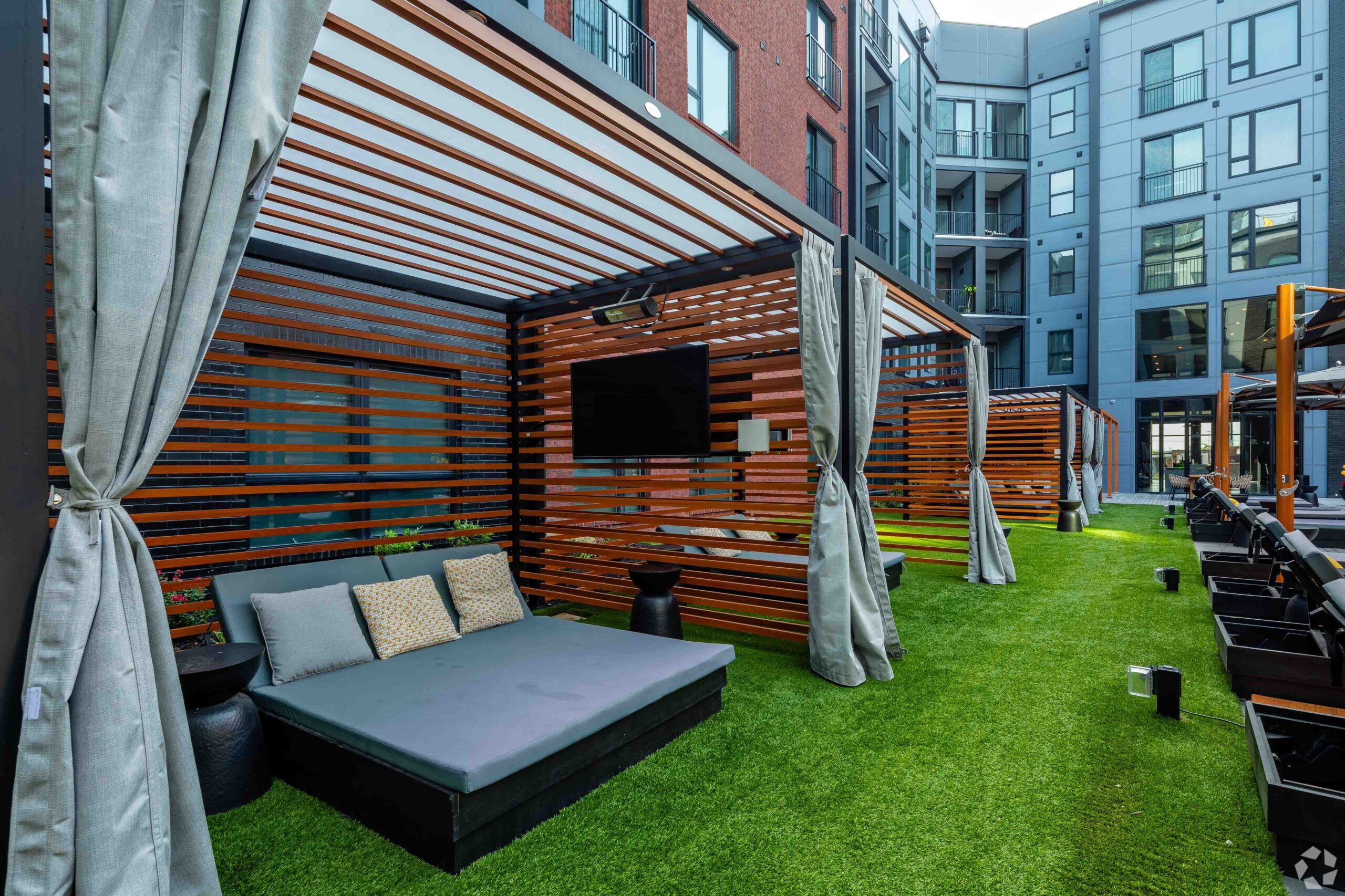
Forced disposition due to federal fraud charges against the developer. LuxLiving is systematically liquidating its St. Louis portfolio, creating a rare opportunity to acquire a trophy Class A asset below replacement cost with motivated seller pricing.
Sellers under disposition pressure do not negotiate from strength. Every week the asset sits on the market widens the gap between our basis and replacement cost. The window closes when someone puts a bid in at the seller's number.
This is not a speculative recovery play. SoHo is already 94% occupied, already cash-flowing, and already generating stabilized NOI. What we are buying is a stabilized asset at forced-seller pricing. The underwriting is backward-looking, not forward-looking.
National Picture
The supply faucet is turning off.
Construction starts are down 74% from the 2021 peak. The back half of this decade structurally favors existing stabilized assets.
Market Context
The supply faucet is turning off.
Our national multifamily research scored over forty US markets against ten rigorous drivers. The conclusion: construction starts have collapsed 74% from the 2021 peak, and the back half of this decade structurally favors existing stabilized assets in markets with low pipeline risk.
Construction starts dropped 74% from the 2021 peak. The multifamily pipeline is collapsing nationally.
Roughly 270,000 completions expected in 2026 — the slowest year in a decade.
National vacancy projected at 4.9% by end of 2025.
Rent growth projected at 2.4% nationally in 2026, accelerating through 2027 as supply absorbs.
Insurance costs up 75% since 2019 nationally. Florida and the Gulf Coast are 2 to 3x worse.
Domestic migration favors the Carolinas, Tennessee, and the affordable Midwest over expensive coasts.
The Takeaway
The 2021 supply wave crests in 2025. The back half of this decade structurally favors existing stabilized assets in markets with low pipeline risk, because new construction cannot ramp fast enough to satisfy the demand baseline.
Why The Midwest
Structurally underpriced for its fundamentals.
Columbus leads the Midwest in rent growth (2.5 to 3.5%) on the back of Intel's $20B+ fab in New Albany.
St. Louis sits in sub-4% vacancy territory with $130K/unit entry points and 8 to 10% cap rates in target neighborhoods.
Midwest insurance costs run 40 to 60% below Florida and coastal California averages.
While capital has flocked to the Sun Belt and now faces oversupply, the Midwest has quietly built the best risk-adjusted fundamentals in the country. This is where the next cycle is won.
The Submarket Anchor
St. Louis: the undervalued anchor.
The St. Louis metro has one of the lowest structural vacancy rates in the country. Class A price per unit runs 40 to 60% below Sun Belt peers for equivalent or better fundamentals. Property taxes and insurance are both materially lower than coastal alternatives.
vacancy
Sub-4% (tighter than 90% of US metros)
rent Growth
2.0 to 3.0% in stable submarkets
entry Price Per Unit
$130K to $260K (Class A range)
cap Rate
5.25% to 6.0% (Class A stabilized); 8 to 10% in select neighborhoods
property Tax
~1.0%
insurance
Moderate (inland Midwest, low disaster risk)
rent Control
None (Missouri preempts local rent control)
The Risk We Underwrite
St. Louis metro population growth is flat to slightly negative. The thesis requires submarket selection (Soulard, Clayton, Central West End, Chesterfield) rather than broad metro exposure. The NGA corridor represents an additional long-term tailwind.
How SoHo Mitigates
SoHo is already stabilized at 94% occupancy in a trophy-quality building within Soulard. This is not a speculative play on St. Louis metro recovery — it is a stable cash-flowing asset in one of the metro's strongest submarkets, acquired below replacement cost due to seller circumstance, not market softness.
Economic Anchors
Who keeps the lights on in Soulard.
Soulard sits inside a labor shed anchored by employers that have been in place for generations. These are stability-beta employers, not growth-beta. Exactly the kind of tenant base that keeps occupancy above 92% through rate cycles.
| Employer | Employees | Sector |
|---|---|---|
| BJC HealthCare / WashU | 26,000+ | Healthcare/Education |
| Centene Corporation | 4,530 | Healthcare ($154B revenue) |
| World Wide Technology | 10,000+ | Technology ($20B+ revenue) |
| Emerson Electric | 5,000+ | Manufacturing (Fortune 500) |
| Edward Jones | 50,000+ nationally | Financial Services |
| Enterprise Mobility | 8,000+ | Transportation (Global HQ) |
Supply Cliff
The lowest supply pipeline in a decade.
1,247
Units Under Construction
~1,247 units under construction (1.0% of inventory). The lowest pipeline in a decade. That creates pricing power for every existing stabilized asset in the submarket.
Ready To Dig Deeper